
Discover the best way to turn Facebook Fans not Customers for you business, just watch the video above to learn how. Facebook marketing strategies will be the difference between BS and Business Strategies.
Discover the best way to turn Facebook Fans not Customers for you business, just watch the video above to learn how. Facebook marketing strategies will be the difference between BS and Business Strategies.
Recently I have been meeting with a lot of companies about Pay-Per-Click (PPC), and none of them seem to be happy with their PPC provider. I have heard of and seen atrocious campaign management, lack of thought put into phrase selection and too many PPC campaigns sending a potential customer to the homepage of a website.
Here are some of the most frequent complaints and warning signs you should be aware of when considering a PPC provider or reviewing your current PPC provider.
If you see any of these warning signs or have had any of these complaints about your PPC company, then you are wasting valuable marketing dollars by not taking a proper look at who is providing your PPC campaign. PPC is an extremely powerful method of driving new customers to you. Don’t blow it.

QR stands for quick response so a quick response code is one of those postage stamp looking codes you seem to see all over the place recently. Simply scan it with your phone and it takes you to place on the web.
QR codes have been around for years, on the back of most of our licenses we have small QR codes. They hold a lot more information inside them, so our license holds a lot more information about who we are instead of just a linear or 1D UPC code.
With the advent of smart phones and people putting cameras into smart phones suddenly the general public is able to read information that you would’ve needed an optical scanner in order to use, which most people don’t have. Now with a smart phone, you scan the code and it brings you to a website. Sometimes you need a few technologies to come together in order to make something mainstream.
Most people are just at the early stages of QR code marketing so what people are mainly using it for right now is to send people to a website. You typically see these in newspapers, or on postcards, mailers and up on billboards.
A big industry that is taking interest in this is actually the vending industry. They need to present nutritional and allergy information to consumers before they purchase products. Some vending machines can have many different products stocked so keeping a nutrition guide is not an alternative since the products are always changing. Now they can have a list of items with a QR code next to each, then the consumer can easily scan before they buy to get all the facts.
Most businesses at this point are using simple techniques, sending people to a website or a coupon. So you see a QR code inside of an advertisement you scan the code with
your smart phone and it takes you to their website. That’s a great start but putting some marketing strategies behind it we can start to accomplish more and get more out of the promotion.
While it’s very easy to setup a QR code the first mistake most people make is using the free QR code generator. The free versions have an expiration on them, so if you plan to use them over any period of time, us a QR Code generating service. This will also allow for metrics, also crucial in any marketing campaign.
Business owners need to become a bit more sophisticated about how they use QR codes. Gathering intelligence and marketing effectively will make QR Code campaigns generate more business. Here are the 5 Steps to a Successful QR Code Marketing Strategy.
In anything you do always start with the end in mind, so unless you know what your goal ultimately is when somebody scanned the QR code, think about what you actually want them to do. Do you want them to subscribe to your mailing list, do you want them to get a coupon, do you want them to download an app, fill out a form, buy something, get information…what do you want them to do?
Now that you know what you want them to do, how are you going to get them to do it? Is this going on a printed piece will this be on car magnets, where is this actually going, how are you going to reach your audience? Once you do that, what’s going to get them to actually scan the code? Unless you tell them what to do next nobody’s going to do it. Yes these QR codes are popular but you still have to have a strong call to action. Ie. Scan this code to get a 25% OFF Coupon NOW.
In order to design your funnel you have to have a website and the QR code generator. You’ll need to get the QR code in front of your audience so promoting the QR code you’ll need to you need a strong offer to get people to scan the QR code then you’ll need to drive them to a website and a way to capture their information. This should not be a one transaction deal, getting that person on your e-mail list is worth more than a one-time transaction so you’re able to market to them time and time again.
Once you have your funnel set up your going to actually need to test if it works properly. That will include asking people with different types of phones to check browser compatability and that the process works seamlessly.
The final two pieces, test and measure go hand-in-hand, when you test something out you not only test that the funnel actually worked, but you will also test the offer and the landing page. You want to be sure to be capturing peoples name and email for future marketing. Measure response rates, opt in rates and how many new customers you develop from the campaign.
Leverage the Power of Facebook…Get More Followers on Twitter…Influence More People on YouTube!
Too many people jump on the social media bandwagon and instantly barrage you with sales messages, and advertisements. They think that Twitter and Facebook are advertising platforms, they’re NOT! They are a place where people go to make connections and find like-minded people ultimately, to build relationships with those people.
People in general do not go online to look for ads… unless of course, it’s a hysterical commercial from the Super Bowl.
When you first meet a person do you immediately jump into explaining what you do and talking about the services or products they can buy from you? Of Corse NOT…or at least I hope not! You would look like a jerk.
There are thousands of so called Social Media Experts out there, all preaching how to get 19,523 followers in one week, but what they all seem to be missing is the relationship side of social media. They seem to be taking the direct marketing approach to social media, and sure you can get a certain number of customers doing this, but you will not build loyal customers.
Here are the real facts; people buy from people they KNOW, LIKE and TRUST. The big question is how do you accomplish that when you have never met the person face to face? Think about it, how many times have you seen a person and then met with them before you felt you knew, liked and, most importantly, trusted them? It takes a while, right? So why do we lose this thought process online?
The only “guru” you truly need to follow is a guy that was born in 1888…yes that would make him over 121 years old. And he wrote a little book out there that I am re-naming, “The Lost Book on Social Media”. This book covers everything you need to know about making better connections on Facebook, gaining more followers on Twitter and how to win with YouTube. The crazy part about this book is that it was written over 70 years ago, well before social networking, the internet, and even before the first real television broadcast of the 1936 Olympic Games of Berlin.
The book I’m referring to is Dale Carnegie’s classic, “How to Win Friends and Influence People”.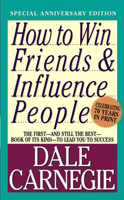
This classic, read by millions of people is the official guide to Social Media. You can get it on Amazon, or in Barnes & Noble, go out and get a copy now.
Some of the highlights that you can use in Social Media immediately are principals like, “Give Honest and Sincere Appreciation,” “Become Genuinely Interested in Other People,” and my favorite, “Smile.” These are just three of the principles outlined in the book but are truly at the heart of social media, it is about building relationships, not about blasting out your advertisement.
Maybe I should start a series called “How to Win Followers and Influence Tweeple.”